DHC-2 / DHC-3 Floatplane Midair Collision
Two Ketchikan sightseeing floatplanes collide over George Inlet, Alaska May 13, 2019, 12:21 ADT · over George Inlet, about 8 miles northeast of Ketchikan, AlaskaMidair collision
9 serious, 1 minor — 10 survivors
Case summary
Neither pilot saw the other aircraft in time, and one airplane's onboard traffic-alert system had been switched off that day.

Mountain Air Service LLC
What happened
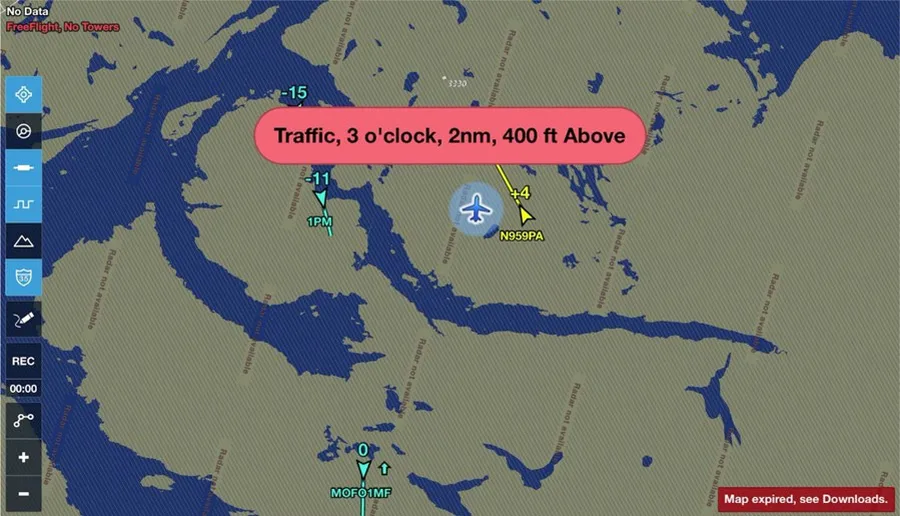
Source: NTSB Final Report (excerpt)At 1217:15, the DHC-3 was about level at 4,000 ft on a track of 225°. About this time, the pilot checked his cockpit traffic display and noted "there were two groups of blue triangles, but not on my line" — he did not check it again before the collision. The DHC-2 was 4.2 nautical miles south, climbing through 2,800 ft, on a track of 255°. About 1219, the DHC-3 started a descent from 4,000 ft while the DHC-2 continued climbing; over the next 1 minute 21 seconds the DHC-3 descended on a track between 224° and 237°, and the DHC-2 leveled out at 3,350 ft on a track of about 255°. The airplanes collided at 1221:14 at an altitude of 3,350 ft, 7.4 nautical miles northeast of the Ketchikan Harbor Seaplane Base. The DHC-2 was fractured into multiple pieces and came down in water and terrain northeast of Mahoney Lake. The DHC-3 entered a right bank, reaching about 50° right wing down within 5 seconds of the collision, then completed a 180° turn before going down in George Inlet.
Why it happened
Source: NTSB Final Report"The National Transportation Safety Board determines that the probable cause of this accident was the inherent limitations of the see-and-avoid concept, which prevented the two pilots from seeing the other airplane before the collision, and the absence of visual and aural alerts from both airplanes' traffic display systems, while operating in a geographic area with a high concentration of air tour activity. Contributing to the accident were (1) the Federal Aviation Administration's provision of new transceivers that lacked alerting capability to Capstone Program operators without adequately mitigating the increased risk associated with the consequent loss of the previously available alerting capability and (2) the absence of a requirement for airborne traffic advisory systems with aural alerting among operators who carry passengers for hire."
- Inherent limitations of the see-and-avoid concept — neither pilot had a realistic opportunity to visually acquire the other airplane before the collision
- Absence of visual and aural alerts from both airplanes' cockpit traffic display systems while operating in a high-traffic air tour area
- FAA's post-Capstone-program transceiver upgrade removed the DHC-3's previously available aural alerting capability without adequately mitigating the resulting risk
- No regulatory requirement for airborne traffic advisory systems with aural alerting among Part 135 operators carrying passengers for hire
- The DHC-3's Garmin GSL 71 control head was found in the OFF position, cutting off the pressure-altitude data the DHC-2's traffic-alerting system needed to generate an alert
- An inadequate checklist in the DHC-3 (inherited from a prior operator) that never required verifying the GSL 71 was ON before takeoff
- No requirement for a safety management system (SMS) at Part 135 operators, which NTSB found could have surfaced this alerting gap before the accident
Photos & media (3)
Aircraft photos and investigation figures from the NTSB final report (AAR-21/04)
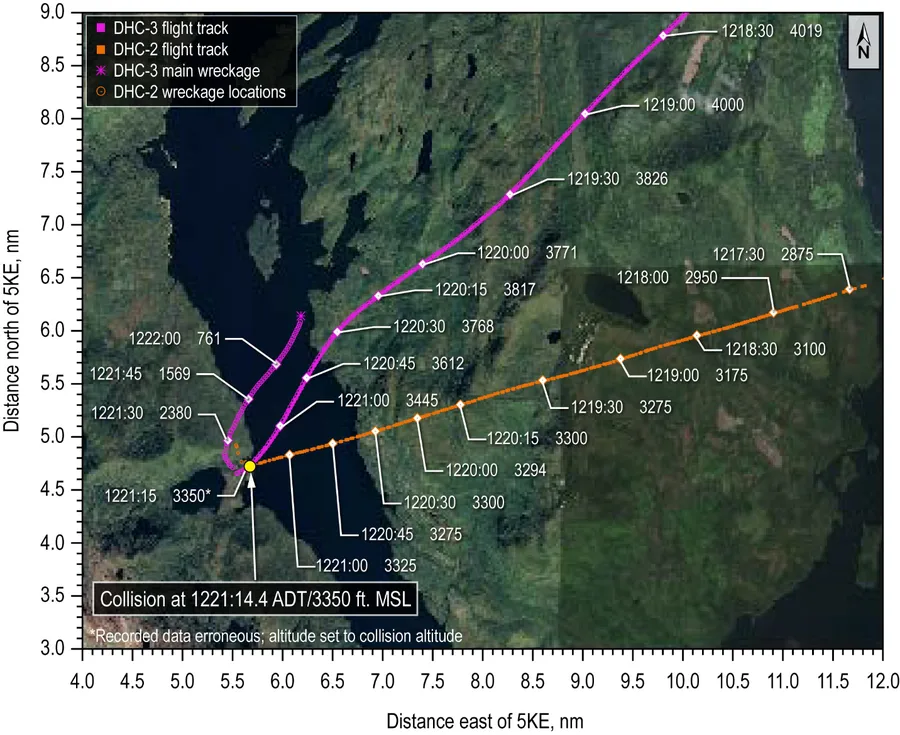
At 1217:15, the DHC-3 was about level at 4,000 ft on a track of 225°. About this time, the pilot checked his cockpit traffic display and noted "there were two groups of blue triangles, but not on my line" — he did not check it again before the collision. The DHC-2 was 4.2 nautical miles south, climbing through 2,800 ft, on a track of 255°. About 1219, the DHC-3 started a descent from 4,000 ft while the DHC-2 continued climbing; over the next 1 minute 21 seconds the DHC-3 descended on a track between 224° and 237°, and the DHC-2 leveled out at 3,350 ft on a track of about 255°. The airplanes collided at 1221:14 at an altitude of 3,350 ft, 7.4 nautical miles northeast of the Ketchikan Harbor Seaplane Base. The DHC-2 was fractured into multiple pieces and came down in water and terrain northeast of Mahoney Lake. The DHC-3 entered a right bank, reaching about 50° right wing down within 5 seconds of the collision, then completed a 180° turn before going down in George Inlet.
"The National Transportation Safety Board determines that the probable cause of this accident was the inherent limitations of the see-and-avoid concept, which prevented the two pilots from seeing the other airplane before the collision, and the absence of visual and aural alerts from both airplanes' traffic display systems, while operating in a geographic area with a high concentration of air tour activity. Contributing to the accident were (1) the Federal Aviation Administration's provision of new transceivers that lacked alerting capability to Capstone Program operators without adequately mitigating the increased risk associated with the consequent loss of the previously available alerting capability and (2) the absence of a requirement for airborne traffic advisory systems with aural alerting among operators who carry passengers for hire."
- Inherent limitations of the see-and-avoid concept — neither pilot had a realistic opportunity to visually acquire the other airplane before the collision
- Absence of visual and aural alerts from both airplanes' cockpit traffic display systems while operating in a high-traffic air tour area
- FAA's post-Capstone-program transceiver upgrade removed the DHC-3's previously available aural alerting capability without adequately mitigating the resulting risk
- No regulatory requirement for airborne traffic advisory systems with aural alerting among Part 135 operators carrying passengers for hire
- The DHC-3's Garmin GSL 71 control head was found in the OFF position, cutting off the pressure-altitude data the DHC-2's traffic-alerting system needed to generate an alert
- An inadequate checklist in the DHC-3 (inherited from a prior operator) that never required verifying the GSL 71 was ON before takeoff
- No requirement for a safety management system (SMS) at Part 135 operators, which NTSB found could have surfaced this alerting gap before the accident