Raytheon A36 Bonanza (N1098F)
Accident near Cameron Park, California August 30, 2007, 12:35 PDT · Cameron Air Park (O61)Serious outcome
2 serious injuries
Case summary
On a hot, high-density-altitude afternoon, an overweight Raytheon A36 Bonanza climbed to only about 40 feet after takeoff before an abrupt wind shift took away its lift. The airplane settled into rising terrain beyond the runway, slid into a boulder, and flipped onto its back. A television news crew filming at the airport captured the entire accident on video.
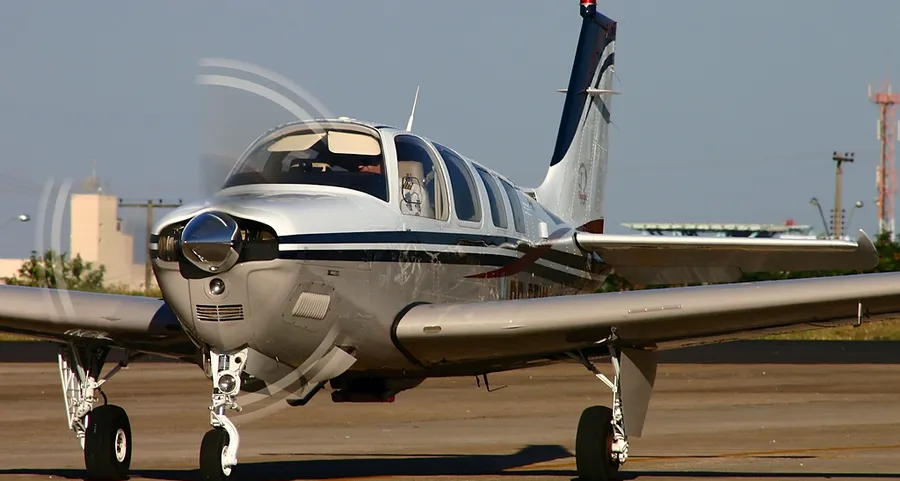
Single-engine, low-wing airplane
What happened
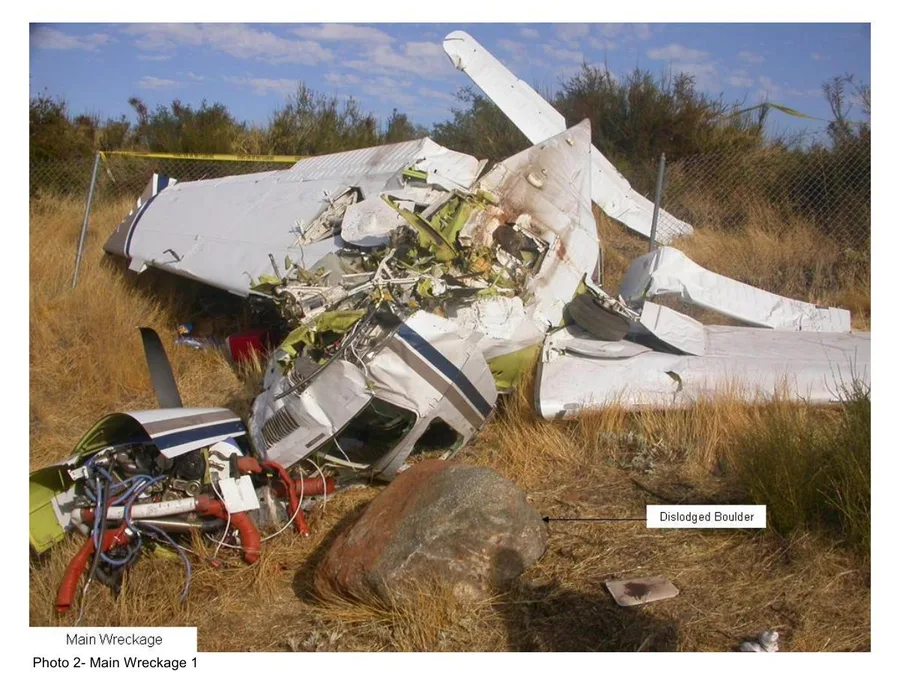
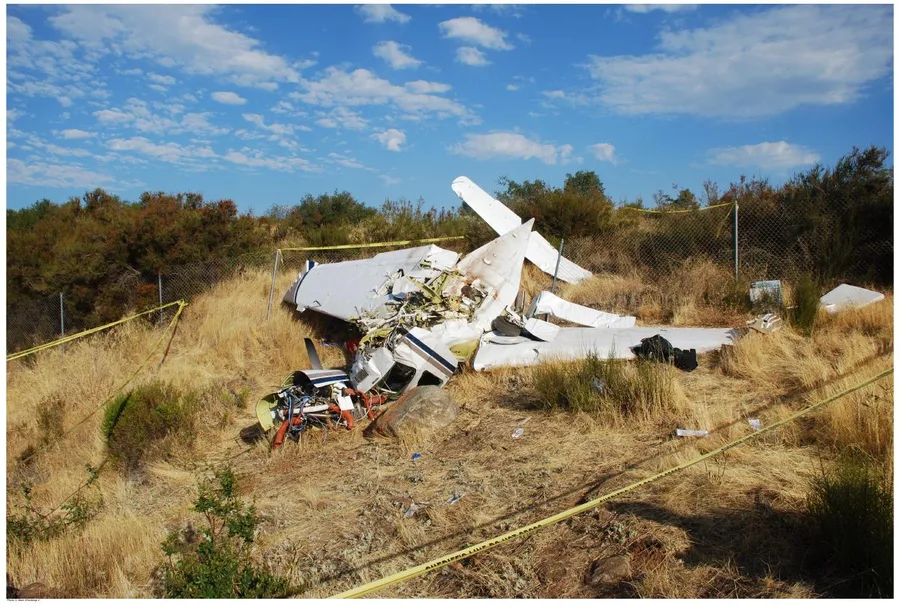
Source: NTSB Final ReportThe Raytheon A36 Bonanza departed from runway 31 at Cameron Air Park (O61), becoming airborne about two-thirds of the way down the 4,051-foot runway and climbing to approximately 40 feet. Between midfield and the departure end, the wind shifted abruptly — roughly a 10-knot crosswind from the left, possibly with a tailwind component — and the airplane lost lift. It settled back toward the ground, the wings began to wobble, and it came down in rising terrain beyond the runway. The airplane slid about 250 feet, struck a boulder, and flipped onto its back near a fence line about 700 feet past the runway end. A television news crew filming at the airport captured the entire sequence on video. The pilot and front-seat passenger were seriously injured; both rear-seat passengers were killed, and the airplane was substantially damaged.
Why it happened
Source: NTSB Final Report"The National Transportation Safety Board determines that the probable cause of this accident was the pilot's inadequate compensation for a sudden wind shift during the initial climb, which resulted in an aerodynamic stall/mush and collision with terrain. Contributing to the accident were the airplane's overweight condition and the high density altitude, which reduced climb performance, and rising terrain beyond the departure end of the runway."
- Takeoff weight approximately 100 lb above maximum gross weight
- High density altitude (4,125 ft on a 96°F day)
- Abrupt wind shift during the initial climb
- Rising terrain beyond the departure end of the runway
- Pilot's response to the wind shift
Photos & media (3)
Original photographs from investigation LAX07FA258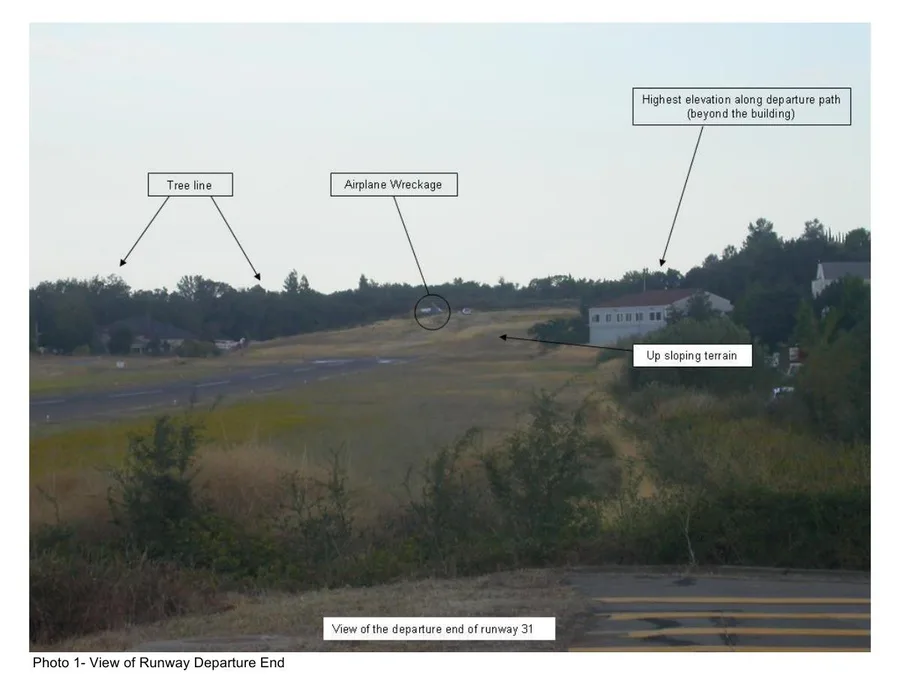
The Raytheon A36 Bonanza departed from runway 31 at Cameron Air Park (O61), becoming airborne about two-thirds of the way down the 4,051-foot runway and climbing to approximately 40 feet. Between midfield and the departure end, the wind shifted abruptly — roughly a 10-knot crosswind from the left, possibly with a tailwind component — and the airplane lost lift. It settled back toward the ground, the wings began to wobble, and it came down in rising terrain beyond the runway. The airplane slid about 250 feet, struck a boulder, and flipped onto its back near a fence line about 700 feet past the runway end. A television news crew filming at the airport captured the entire sequence on video. The pilot and front-seat passenger were seriously injured; both rear-seat passengers were killed, and the airplane was substantially damaged.
"The National Transportation Safety Board determines that the probable cause of this accident was the pilot's inadequate compensation for a sudden wind shift during the initial climb, which resulted in an aerodynamic stall/mush and collision with terrain. Contributing to the accident were the airplane's overweight condition and the high density altitude, which reduced climb performance, and rising terrain beyond the departure end of the runway."
- Takeoff weight approximately 100 lb above maximum gross weight
- High density altitude (4,125 ft on a 96°F day)
- Abrupt wind shift during the initial climb
- Rising terrain beyond the departure end of the runway
- Pilot's response to the wind shift